The first hour in a wet Ball Ground house: what to do, in order
Water in the house, and every minute feels loud. This walk-through takes the first hour in order: what to check before stepping in, what to photograph, what to throw out, and where the checks run out.
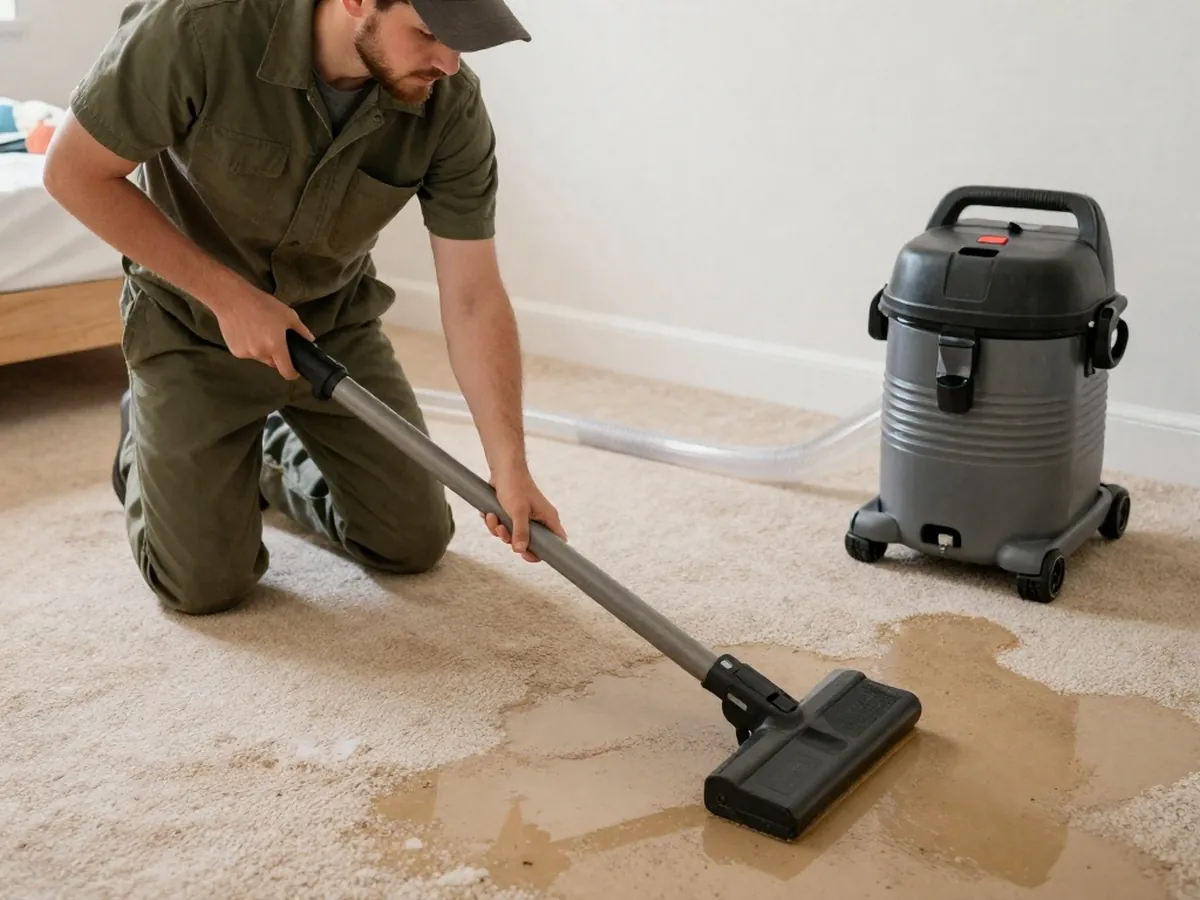
Ten lines to tick off
- Look at the floor and the outlets from the doorway; if water touches anything electrical, stay out
- Smell for gas; if you do, go outside first and phone 911 or your gas utility from there
- Keep clear of any ceiling that bulges or sags
- Close the water supply if the valve is within reach on dry ground
- Keep children, pets and anyone unwell away from dark or foul water
- Photograph wide and close, then film a slow walk through, before anything moves
- Write down the date, the time you found the water and the likely source
- List what was damaged and keep every receipt
- Lift out only the small items that are safe to carry, and leave heavy furniture
- Renters tell the landlord or property manager; owners tell the insurer and then line up the contractor
Before you step in: look at the floor, the outlets and the ceiling
Start from the doorway. Look at the floor first: if water reaches outlets, power strips, cords or the electrical panel, you are not going in. In the CDC's flooded-home advice, power is never switched on or off, and electric tools never used, by anyone standing in water. The main switch is for dry ground only, and if you cannot reach it that way, an electrician is the call. Before power returns to a flooded house, the CDC wants an electrician to look it over first.
Then look up. FEMA cautions that a ceiling may be holding water and that floors may not be safe to walk on. Pennsylvania's environmental agency adds that wet drywall is fragile and crumbles at a bump, and that swollen or pulled-away ceiling drywall needs replacing. A ceiling with a belly or a sag means that room stays empty.
A gas smell changes the order, and it goes to Atlanta Gas Light or 911
Atlanta Gas Light's emergency page says to leave immediately, avoid electrical switches, phone from outside and never go looking for the leak. It lists 877-427-4321 for leaks and odors, with 911 as the other number. The CDC's flood guidance adds that sparks have no place near a gas smell and that the gas company, police or fire department needs to hear about it.
The city pages do not say which company supplies gas to a given Ball Ground street. Use the number on your gas bill or the Atlanta Gas Light line, and 911 for anything that feels urgent.
Stop the water, then take photographs before anything moves
If the shutoff valve is within reach on dry ground, close it. If you would have to wade to get there, leave it for the water department or the contractor.
The NAIC's advice for a homeowners claim starts in the same place: check your deductible, photograph or film the damage, list what was damaged, keep receipts and tell the insurer promptly. It adds that you may want the contractor to meet the adjuster. Georgia's insurance office, in a storm notice, says to make temporary repairs only if it is safe, to keep receipts for them and to beware of scammers. Whether the policy pays for any of it is up to the policy wording and the insurer.
Clean water, dirty water, and the CDC's throw-out rule
Supply-line water starts clean. Water that came up a drain, through a floor or in from the yard does not. The CDC's guidance for flooded homes treats doubtful water as contaminated. Keep it away from dishes, toothbrushes, food, hand-washing, ice and baby formula, and test a private well before anyone drinks from it. Its short rule for belongings is to throw out what you doubt.
EPA treats sewage and contaminated water as professional work, and lists carpet and ceiling tiles among porous materials that sometimes cannot be saved. FEMA names mattresses and carpeting that touched flood water.
Fans, humidity and the 24-to-48-hour window
EPA's mold-and-moisture guide treats the first two days as the working window, 24 to 48 hours, for drying soaked areas and belongings before mold gets going. For indoor air it sets a ceiling of 60 percent relative humidity and calls the range from 30 to 50 percent ideal. UGA's inspection checklist repeats the 24-to-48 window and brings in a dehumidifier once humidity climbs past 50 percent. The CDC says to point fans outward and, for a house that stayed wet and closed for days, to assume mold.
Walls run on a longer clock. Texas A&M AgriLife says to leave walls open until they are dry, which may take up to a month. Mississippi State says walls can take weeks or even months, with 4 to 6 weeks as the minimum wait before repairing plaster or painting. Any generator or gasoline engine runs outside and stays well clear of doors, windows and vents, by 20 feet or more.
When does a wet house stop being a weekend job?
When the water is dirty, the drywall has gone soft or the floor is still wet after a day, the checks here have run out. Water that reached a ceiling belongs with ceiling and wall leaks, and a drain that backed up belongs with sewage backup cleanup.
Nothing here replaces a contractor looking at the room. Call (678) 899-6694, name the wet rooms and say what you have already done; the conversation covers what comes next.
Gather the street address, the room that is wet and roughly when it started. A renter's news goes first to the person who manages the building, not to the line. The line covers Ball Ground, Nelson, Waleska and Holly Springs. When you are ready, call (678) 899-6694.