At 8 to 10 you find a wire down, water at the panel or a light fixture, a bulging ceiling, a generator running indoors or a gas smell. Use the list above; those go to 911 or the utility.
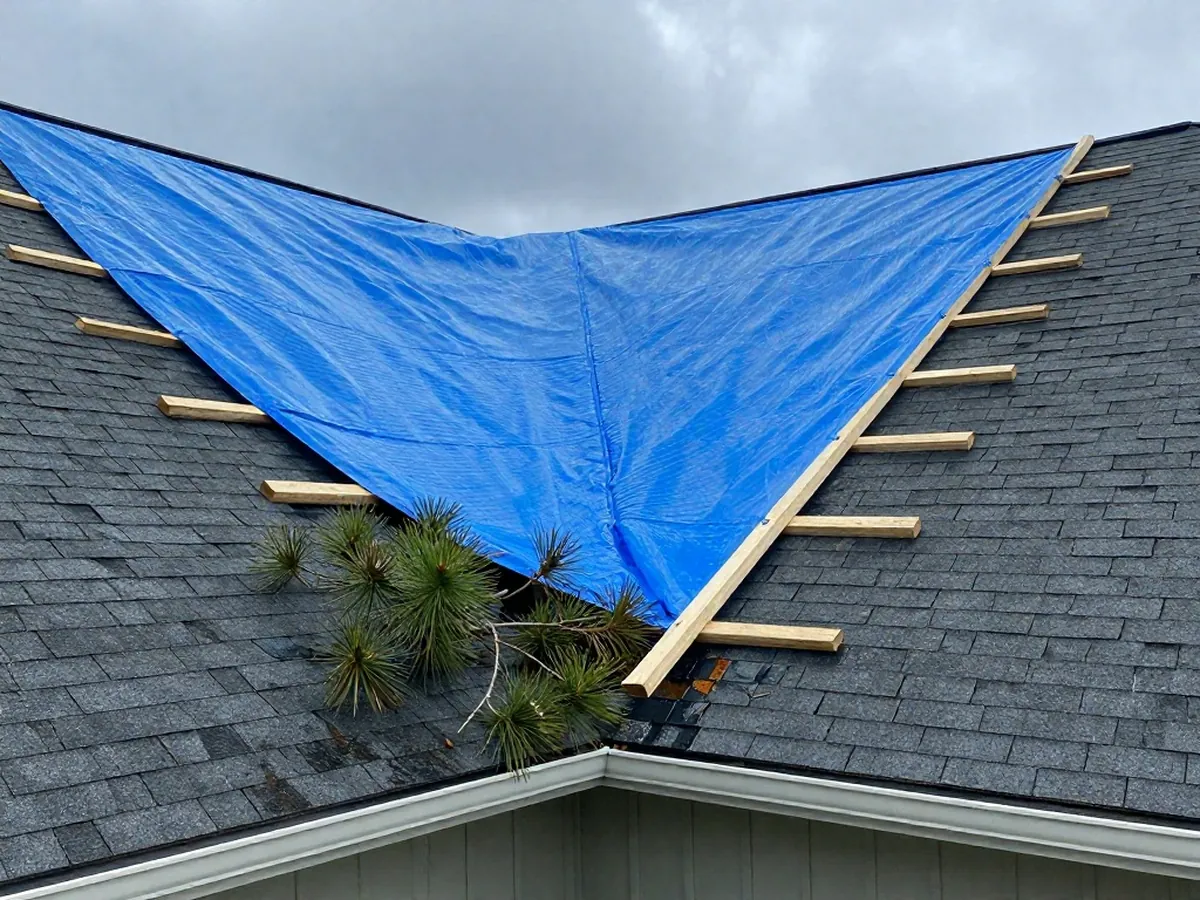
Roof leaks and storm water in Ball Ground
Storm and Roof Leak Damage in Ball Ground
Storm water damage in Ball Ground, GA often comes through the roof: a wet attic, a stain on an upstairs ceiling or drips after a windy rain. Call (678) 899-6694, then describe the soaked room and how long it has been raining.
A roof opening and a wet house are two jobs
The listing quotes no price. On the wet-house side, the contractor weighs how long the rain kept coming, whether the attic insulation soaked and how many ceilings were reached; Pennsylvania's agency says wet ceiling insulation has to come out so the framing can dry. The roof opening itself is a roofing contractor's work. Georgia's insurance office says to keep receipts and make only temporary repairs, and only if it is safe.
What stays and what goes
Wet attic and ceiling materials
Pennsylvania's agency says ceiling drywall that has swollen or pulled away needs replacing, and wet insulation above it comes out. Texas A&M AgriLife's flood guidance throws out wet fibrous insulation, and EPA warns that porous materials like ceiling tiles may not be salvageable. The contractor checks each layer with a moisture meter. The wider list is on the keep-or-tear-out page.
Back away and get help if
A downed or sagging wire near the house, or water around the panel and outlets: stay away and phone 911 or your electric utility. The CDC says the main switch is for dry ground only.
Inspect the roof only from the yard or an upstairs window, never from a ladder or the roof itself. ARMA's storm guidance starts with a look from the ground, and a roofing contractor takes it from there.
A ceiling bulging or sagging below the leak: stay clear of that spot. FEMA says a ceiling can hold water above it. Phone 911 if it falls on someone.
A generator or gas pump running in a garage or basement during an outage: shut it off and move it outdoors. Keep it 20 feet or more away from every door, window and vent, the CDC's distance. A gas odor means get out first, then phone 911 or your gas utility from the yard.
What usually lets the water in
- Shingles lifted or torn by wind, letting rain reach the roof deck
- Flashing around a chimney, vent or skylight that opened up
- A limb or debris that punched through the roof covering
- Gutters packed with leaves that spill water back under the roof edge
- Wind-driven rain pushed in around a window or door frame
A roof leak on the 1-to-10 read
4 to 7: rain has stopped but insulation, ceiling or walls are wet. Call (678) 899-6694 and name the room where it appeared.
1 to 3: one drip after a hard rain, dry the next day. Note the date and the wind direction and dial (678) 899-6694 if it returns.
A few looks before you call
From the driveway, four looks
- ARMA's advice starts on the ground.
- Look at the roof from the yard for lifted, torn or missing shingles.
- Look again from an upstairs window.
- In the attic, shine a light along the roof's underside beside each chimney and vent, the spots where ARMA says stains tend to appear.
- Photograph what you see, and write down the date of the storm.
- Then call (678) 899-6694.
Gather the street address, the room that is wet and roughly when it started. A renter's news goes first to the person who manages the building, not to the line. The line covers Ball Ground, Nelson, Waleska and Holly Springs. When you are ready, call (678) 899-6694.