At 8 to 10 you find water touching the panel, an outlet or a light fixture. A ceiling bulging below the break and a gas smell from a water heater closet sit here too. Leave that area and use the list above; these go to 911 or the utility first.
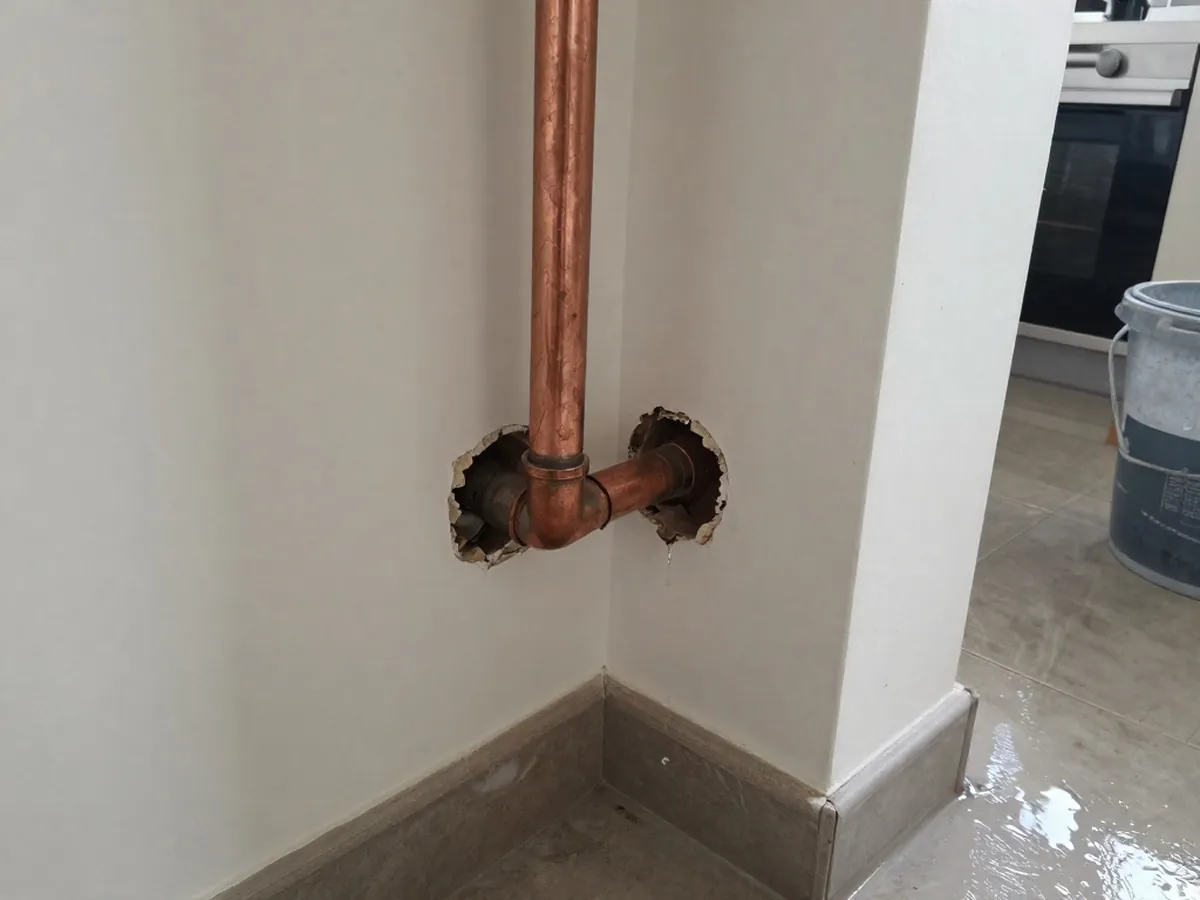
Split pipes and sudden leaks in Ball Ground
Burst Pipe Water Damage in Ball Ground
A burst pipe in Ball Ground, GA often shows up as a hiss in the wall, a ceiling that suddenly stains, or a meter still turning with every tap shut. Call (678) 899-6694; the contractor needs to know which wall or floor is wet and whether the pipe is still running.
What sets the size of a pipe-break job
The listing quotes no price. The contractor weighs how long the line ran before it was shut off and how many floors the water crossed. Soaked drywall, insulation or a ceiling below add to the list. The pipe itself belongs to a plumber; the water it left behind belongs to the restoration contractor. Photos of every wet area, taken before anything moves, help both the contractor and the insurer, and the NAIC puts photos near the top of its claim list.
What stays and what goes
Wall and ceiling materials after a break
Texas A&M AgriLife's flood guidance and Mississippi State's wall guide agree on the basics. Drywall that sat in water comes out, and wet fibrous insulation comes out with it, since fiberglass batts block airflow and keep the framing from drying. Mississippi State's wall guide says a drenched wall can stay wet for weeks and sometimes months, and sets 4 to 6 weeks as the earliest time to patch plaster or paint. A weep found early is another matter; the contractor takes a moisture reading and decides from that. More materials sit on the keep-or-tear-out page.
Back away and get help if
Water running near the electrical panel, outlets, cords or a ceiling light: stay out of the room. The CDC says the main switch is for dry ground only, and an electrician is the call if you cannot reach it that way. Phone 911 for sparks or a shock.
If the pipe is still running and the shutoff valve is within reach without wading, close it. If you would have to stand in water to get there, leave it and phone the water department at your City Hall; the town pages list the numbers.
A ceiling under the break that bulges, sags or drips non-stop: stay out from under it. FEMA's warning is that water can be trapped overhead, and drywall that has soaked may fall at the slightest bump. Phone 911 if it comes down on someone.
Gas odor around a water heater closet with a wet floor: exit, leave the switches alone, and phone 911 or your gas utility after you are out.
What usually lets the water in
- A freeze that split a line in an unheated crawl space, attic or outside wall
- A hose left on an outdoor faucet when the temperature dropped
- A fitting or joint that worked loose and wept until it let go
- An old supply line that wore thin at a single spot
- A fastener from an old remodel that pierced a line inside the wall
A pipe break on the 1-to-10 read
4 to 7: the line is shut off, but a wall, floor or ceiling is wet. Call (678) 899-6694 and say which side of the wall the damp is on.
1 to 3: a damp spot by a fitting, with no sound of running water. Dry it, mark the edge with a pencil, and look again tomorrow; dial (678) 899-6694 if the mark has moved.
A few looks before you call
A meter test, then your notes
- Hunting for a leak you cannot see?
- Shut off every tap and appliance, write down the number on the water meter, leave the house dry for two hours and check the number again.
- EPA says any change likely means a leak.
- After that, photograph each wet spot before anything moves, note the time you found it, and write down which fixtures were running.
- Call (678) 899-6694 with the notes in hand.
Gather the street address, the room that is wet and roughly when it started. A renter's news goes first to the person who manages the building, not to the line. The line covers Ball Ground, Nelson, Waleska and Holly Springs. When you are ready, call (678) 899-6694.