8 to 10: growth after sewage or flood water, a large patch, ducts that got wet, or anyone struggling to breathe. The CDC notes some people react severely to mold; use the list above and get medical help for breathing trouble.
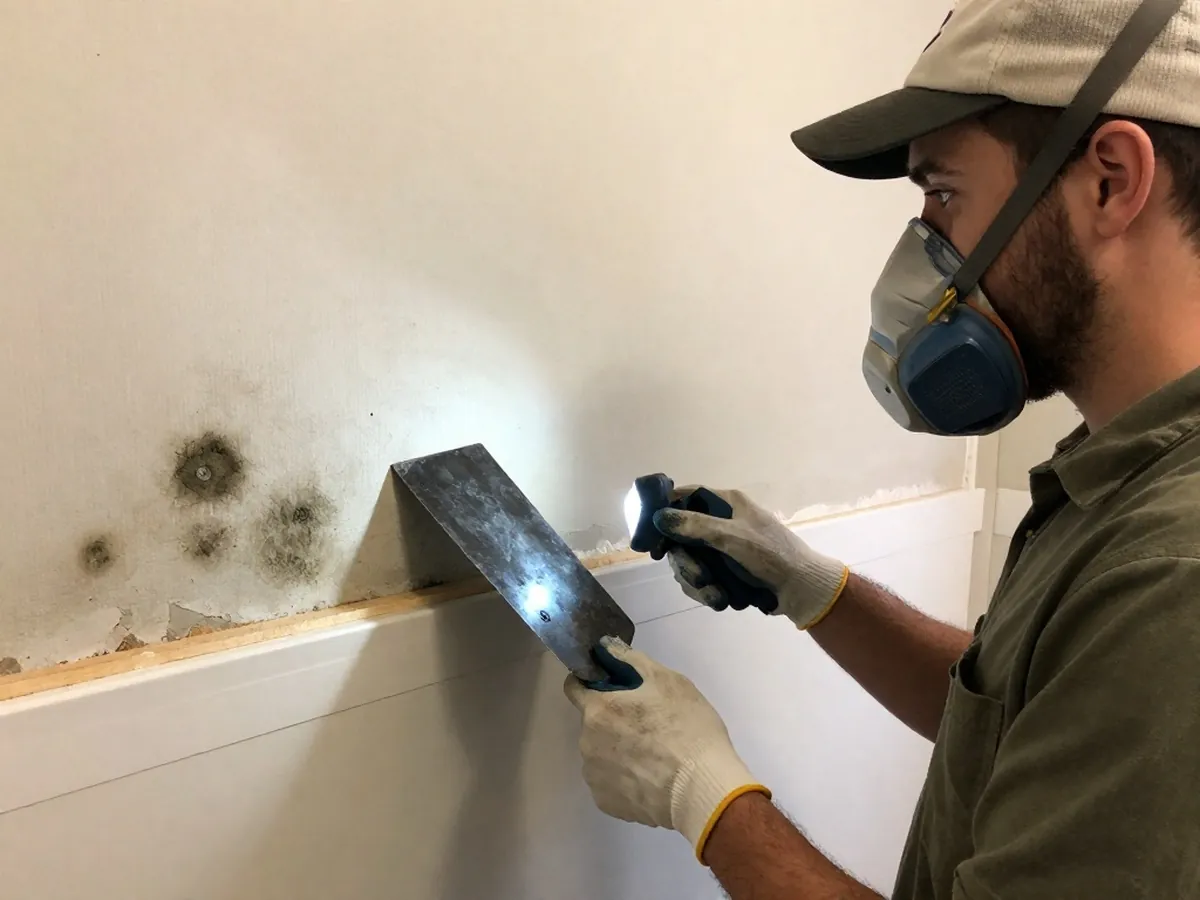
Dark spots and musty smells in Ball Ground
Mold After Water Damage in Ball Ground
Mold after water damage in Ball Ground, GA tends to turn up where a leak was never fully dried. Look for dark spotting along a wall base, a musty smell in a closet or a stain that comes back. Call (678) 899-6694 and say where it is and what leaked.
What decides how big a mold job is
Area, material and cause. EPA's rule of thumb is that a patch under about 10 square feet may suit a homeowner, and larger or contaminated areas call for professional help. Carpet and ceiling tiles are porous, and EPA says porous materials may be beyond saving; the moisture source also has to be dealt with or the problem returns. The CDC does not recommend mold testing. The listing quotes no price; the contractor sizes the work after looking.
What stays and what goes
Dry it, clean it or tear it out
EPA says porous materials, ceiling tiles and carpet among them, may have to be thrown away. Drywall that stayed wet is the common case: Mississippi State says soaked drywall cannot be saved, and wet fiberglass insulation holds moisture against the framing. The contractor opens a small section, reads it with a moisture meter and tells you what can stay. More materials sit on the keep-or-tear-out page.
Back away and get help if
A large patch, or a musty smell after sewage or flood water: leave the cleanup to a professional. EPA says contaminated water needs one, and about 10 square feet is the size beyond which a home job stops making sense.
Never mix bleach with ammonia; the CDC warns against it. Leave the room and open a window if fumes sting your eyes or throat, and phone 911 if anyone has trouble breathing.
Leave the furnace and air conditioner off if the ducts may be wet or contaminated; EPA says not to run HVAC in that case.
Wet drywall above or beside the spots may be weak, and a ceiling that sags with moisture can fall at a bump. Stay out from under it and phone 911 if it falls on someone.
What usually lets the water in
- A leak that dried on the surface while the wall behind it stayed damp
- Water-damaged carpet, padding or ceiling tile that was left in place
- Indoor humidity that stays over 50 percent in a basement or closed room
- A clogged gutter, air conditioner drain line or drip pan that keeps wetting one spot
- Condensation on cold surfaces in a room where the air does not move
Mold on the 1-to-10 read
4 to 7: dark spotting that returns, a musty smell that grows, or a stain over a wall that was once wet. Call (678) 899-6694 and say where it is.
1 to 3: a faint smell in a closet and no stain. The CDC keeps indoor humidity at 50 percent or lower, so a humidity meter and a fan can tell you something. Dial (678) 899-6694 if the smell stays.
A few looks before you call
Four notes that help a mold call
- Where is it: which room, which wall, how high?
- What leaked there, and when?
- Is the spot bigger than a three-by-three-foot square, which is close to EPA's 10 square feet?
- Does anyone in the house react to it?
- Write the answers down, take a photograph with a flashlight beam across the surface, and call (678) 899-6694.
Gather the street address, the room that is wet and roughly when it started. A renter's news goes first to the person who manages the building, not to the line. The line covers Ball Ground, Nelson, Waleska and Holly Springs. When you are ready, call (678) 899-6694.