At 8 to 10 you will see a bulge or sag, water at a light or fan, a sewage smell or a gas smell. Use the list above, since 911 or the utility comes first and no stain is worth standing under.
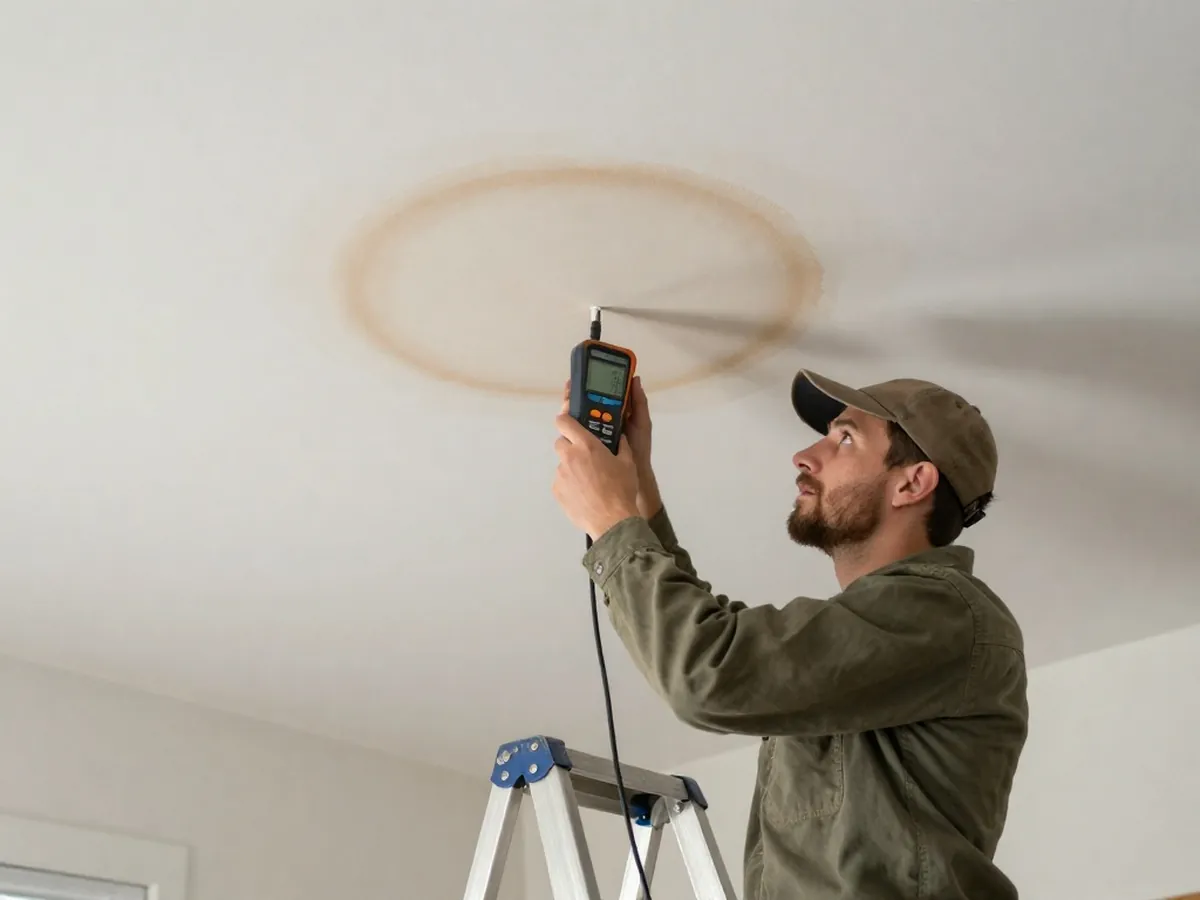
Stained ceilings and wet walls in Ball Ground
Ceiling and Wall Leaks in Ball Ground, GA
In Ball Ground, GA a ceiling leak tends to announce itself with a tan or brown patch, paint that blisters, or a drip that stops and starts. Water may be trapped above the stain. Call (678) 899-6694 and say which room is under it and whether it has rained.
Why the stain is only the visible edge
The listing quotes no price. The size of a ceiling job follows how much drywall has swollen or pulled away, whether the insulation above is wet, how many rooms the water crossed and where it started. Pennsylvania's environmental agency says swollen ceiling drywall that has pulled away needs replacing, and that wet insulation above has to come out so the framing the ceiling hangs from can dry. Photos of the stain from a few angles, and of the room above it, help the contractor judge the job before the visit.
What stays and what goes
Paint over it, or take the board down
A flat, dry stain on a firm ceiling is a different job from swollen drywall. Pennsylvania's agency says swollen or pulled-away ceiling drywall needs replacement, and EPA names ceiling tiles among porous materials that may be beyond saving. Mississippi State advises waiting at least 4 to 6 weeks before repairing plaster or painting walls after a soaking, which is why the contractor reads the moisture first. Other materials are on the keep-or-tear-out page.
Back away and get help if
Ceiling drywall that bulges, droops or keeps dripping: nobody stays underneath. Water can sit above it, and wet drywall may let go at a touch. Phone 911 if it comes down on someone.
Drips at a light fixture, ceiling fan or outlet: leave that room and do not touch the switch. The CDC says the main switch is for dry ground only; otherwise phone an electrician. Sparks or buzzing mean phone 911.
A stain with a sewage smell, or drips that follow a bathroom above: treat it as contaminated water and keep skin and children away from it. The CDC says to throw out what you doubt.
Gas smell in the room or around the attic furnace or water heater: out of the house, no switches touched, and phone 911 or your gas utility from the street.
What usually lets the water in
- A supply or drain line in the ceiling above that leaks at a joint
- A roof leak that wets the insulation and soaks through the drywall below
- A tub, shower or toilet seal leaking from the floor above
- An air conditioner drain line or drip pan that overflows into the ceiling
- Condensation on cold ducts or pipes in the attic that drips onto the ceiling
A wet ceiling on the 1-to-10 read
4 to 7: the stain is growing, feels damp or the paint is bubbling. With EPA's 24-to-48-hour drying window running, dial (678) 899-6694 and name the room.
1 to 3: a stain that stays dry between rains. Trace its edge in pencil, date it, and call (678) 899-6694 if the line is passed.
A few looks before you call
Is the stain still growing? Four ways to tell
- Run a pencil around the stain where it ends, then jot the date beside the line.
- Look at what sits above that spot: a bathroom, a laundry or an air conditioner closet changes the story.
- Check again after rain and after someone showers, and see whether the line has been passed.
- Photograph it from the doorway.
- Then call (678) 899-6694 and describe what the pencil line shows.
Gather the street address, the room that is wet and roughly when it started. A renter's news goes first to the person who manages the building, not to the line. The line covers Ball Ground, Nelson, Waleska and Holly Springs. When you are ready, call (678) 899-6694.